|
Heath Palmer |
|||
| Online Store or Catalog |
Purchase options | Info on being an AMSOIL Dealer | Free AMSOIL Product Catalog |
| New Products | Sell AMSOIL in your store or use it for your business | Company Info |
Comparative Testing |
| |
Product |
Categories | |
| Motor Oils | Diesel Oils | Motorcycle Oil | Snowmobile |
| Hydraulic Oil | Air - Filters - Oil | Powersports Page | Contact me |
| Grease | Fuel Additives | Racing Oil | Wiper Blades |
| Gear Lubes |
Transmission Fluids |
By-Pass |
Compressor Oil |
To find out what AMSOIL products are made for your vehicle, use the application guide:
AMSOIL has a documented history of innovation and leadership. Why Synthetics?

Welcome
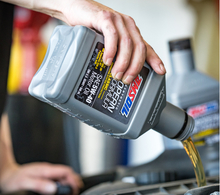
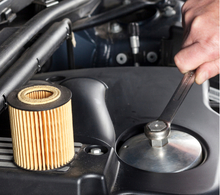
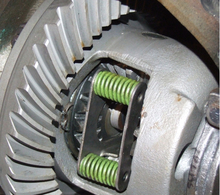
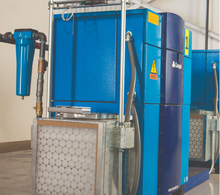
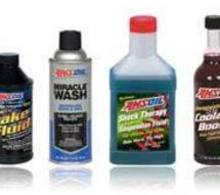
AMSOIL FORMULATES A WIDE SELECTION OF SYNTHETIC LUBRICATING OILS for all types of engine and gear applications, including those for specialized vehicles and severe operating conditions. In addition, AMSOIL has developed sophisticated fuel additives, filtration systems and other companion products that supplement and extend lubricant performance. This complete line of quality products is recognized by countless private motorists, fleet managers and industrial administrators as the best and most cost-effective choice for increasing engine performance, reducing maintenance and prolonging vehicle and equipment life.
Engines, transmissions and other components contain hundreds of moving parts. Though the metal surfaces of these parts look very smooth, they are actually filled with microscopic peaks and valleys. When a peak on one surface touches its mating surface, it causes damage. The damage may be abrasive, like scratching, or adhesive, in which a portion of one surface sticks to its mating surface, leaving a pit in the original and a lump on he second. When the damage caused by contact is severe, it causes failure, which is usually a sudden event. When it is mild, it causes, wear a long-term event. Wear cannot be eliminated altogether, but it can be slowed through proper lubrication. Failure prevention and wear reduction are the primary functions of lubrication.
Wear Reduction
Lubricants inhibit friction and wear by providing a film that physically separates surfaces so that when they move, the mating surfaces don't touch. The lubricant's viscosity, technically its resistance to flow, and often thought of as its "thickness", provides the lubricants' ability to separate surfaces. Viscosity is the single most important characteristic of a lubricant.
Cooling
Most lubricants also cool the components they serve. For example, the crankshaft, main and connecting rod bearings, camshaft bearings, timing gears, pistons and lower engine components depend on motor oil for cooling. Lubricants pick up heat from components and carry it to an area, such as the engine's crankcase, where the heat transfers to the surrounding air.
Other
Lubricants also seal, clean, and perform other functions.
Conventional vs. Synthetic Lubricants
Conventional lubricants are refined from crude oil. Refining is a process of physically separating light from heavy oil fractions. Crude oil is a natural substance. It contains millions of different kinds of molecules. Many are similar in weight but dissimilar in structure. Because refining separates products by weight, it groups molecules of similar weight and dissimilar structure, so refined lubricants contain a wide assortment of molecules.
However, not all of these molecules are beneficial to the lubrication process. Some of the molecules found in refined lubricants are detrimental to the lubricated system or to the lubricant itself. For example, paraffin, a common refined lubricant component, causes refined lubricants to thicken and flow poorly in cold temperatures. Some refined lubricant molecules also may contain sulfur, nitrogen and oxygen, which act as contaminants and invite the formation of sludge and other by-products of lubricant breakdown.
Synthetic lubricants are chemically engineered to form pure lubricants. Synthetic lubricants contain no contaminants or molecules that "don't pull their own weight." Because synthetics contain only smooth lubricating molecules, they slip easily across one another. On the other hand, the potpourri of jagged, irregular and odd-shaped molecules of refined lubricants don't slip quite so easily. The ease with which lubricant molecules slip over one another affects the lube's ability to reduce friction, which in turn, affects wear control, heat control and fuel efficiency. Synthetics are superior.
Uniformity also helps synthetics resist thinning in heat and thickening in cold, which helps them protect better over a system's operating temperature range. Synthetic lubricants are designalbe; they may be made to fulfill virtually every lubricating need.
Does Conventional Oil Offer Any Advantage?
Petroleum oils have met our lubrication needs for more than a hundred years. They provide adequate lubrication and protection in many applications and they usually cost less to purchase than synthetics. However, because synthetic lubricants may be used for longer drain intervals than conventional lubes, and components lubricated with synthetics tend to require fewer repairs than those lubricated with conventional lubes, people who use synthetics often end up spending less on lubrication and vehicle maintenance than those who use conventional lubricants. The savings to industrial and commercial users are well-documented by AMSOIL and others. AMSOIL Synthetic Motor Oils are the finest lubricants available today. Because AMSOIL uses only the highest-quality base stocks and additive chemicals, AMSOIL Synthetic Motor Oils provide unsurpassed protection for virtually every application.